A slow tape where every bounce kept failing
The morning's one clean piece of work was a health-care long taken against a hard flush, stopped tightly and scaled out in thirds and sixths as it worked. Everything else on the desk was an attempt to buy support that would not hold — a launch name worked twice off the same breakout idea, and a mega-cap bought at VWAP and then again at the lower band, each entry cut quickly. A memory-name short was added to on the way against it and cost the most of anything traded.
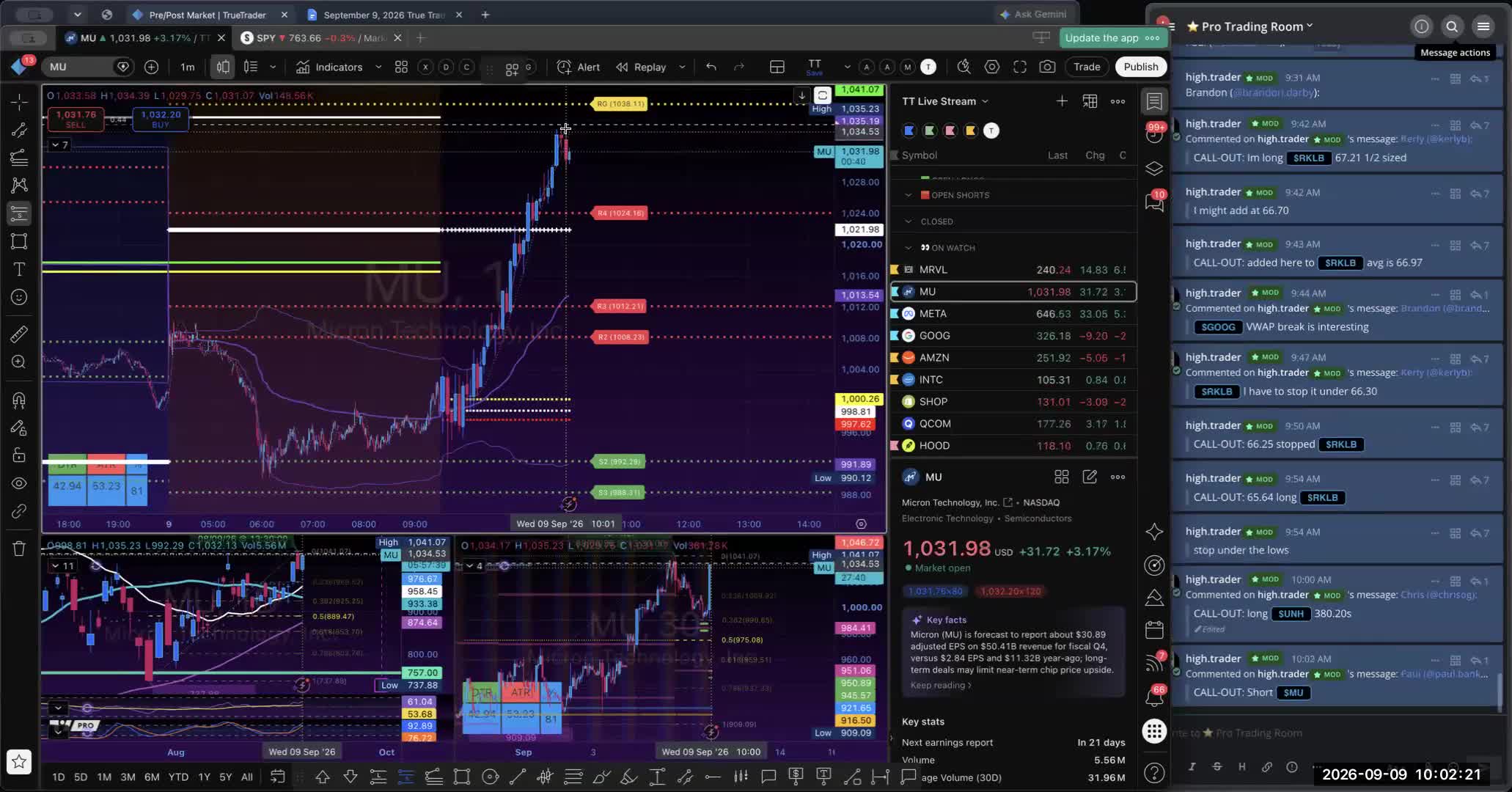
The 1h 11m session is on the other side of this.
Everything above is the write-up. This is the morning itself, with the names on every call and the room talking through it.
It was called a slow day early and the desk traded it as one for a while — alerts set, levels marked, nobody reaching. The first real commitment was a launch-name long taken at half size off a breakout, added to on the pullback for a better average, with a stop placed under the lows with genuine room. That structure was correct and the trade still failed twice: once on the third test of the session lows, once more later on the same idea. Neither attempt was oversized and neither was argued with after it stopped.
“My win rate was ridiculous. Was like 22%. Embarrassing. But still worked out.”
Getting stopped out 5 of 6 times and still coming out ahead — why win rate isn't the whole story.
The mega-cap was the morning's real lesson in repetition. It sold off into VWAP and the 50-day, and the first entry came twenty cents above VWAP with an explicit plan — one shot, one kill, no multiple tries. Size was added at fifty percent on the hold, and it stopped within a few minutes. Then it was re-entered anyway, at the lower band, at a better price, then again after that, each with a defined stop and a modest target. Every one of those entries was managed properly. Collectively they were four attempts to buy the same failing level, and the honest read is that the plan not to give it multiple tries was the right plan and it wasn't kept.
The one thing that paid was the health-care long, taken into a hard dump on light volume with a wide stop and no expectation of a fast resolution. It went sideways for a stretch before anything came off, and then it was scaled — a third, another third, then halves of the remainder — with each piece booked larger than the last. The short in the memory name was the mirror image: an add into adverse movement, with the stop kept in place, and it ended up the largest single cost of the session. Both trades were held with conviction. Only one of them had the tape agreeing.
The morning in figures
Net points are per share. Apply your own size to get your own number: at 1,000 shares, 4.47 points is −$4,470.00. At 100 shares it is −$447.00. At one share it is −$4.47. The desk publishes the move, not a dollar result, because the dollars depend entirely on how you size, and that is your decision rather than ours.
Every trade called that morning
Losers included. Rows with more than one leg were scaled out; open any row to see each exit.