A tape that ticked stops out before it moved
Most of the morning was spent trying to get long into pullbacks that never held long enough to confirm — Apple in particular was entered, stopped on a wick, re-entered and stopped again, and NVDA was tried from both sides. The two trades that did work for our desk were the ones where a moving-average cross was waited out and then scaled in thirds, with the stop pulled to breakeven once the first piece was booked. The desk finished clearly red.
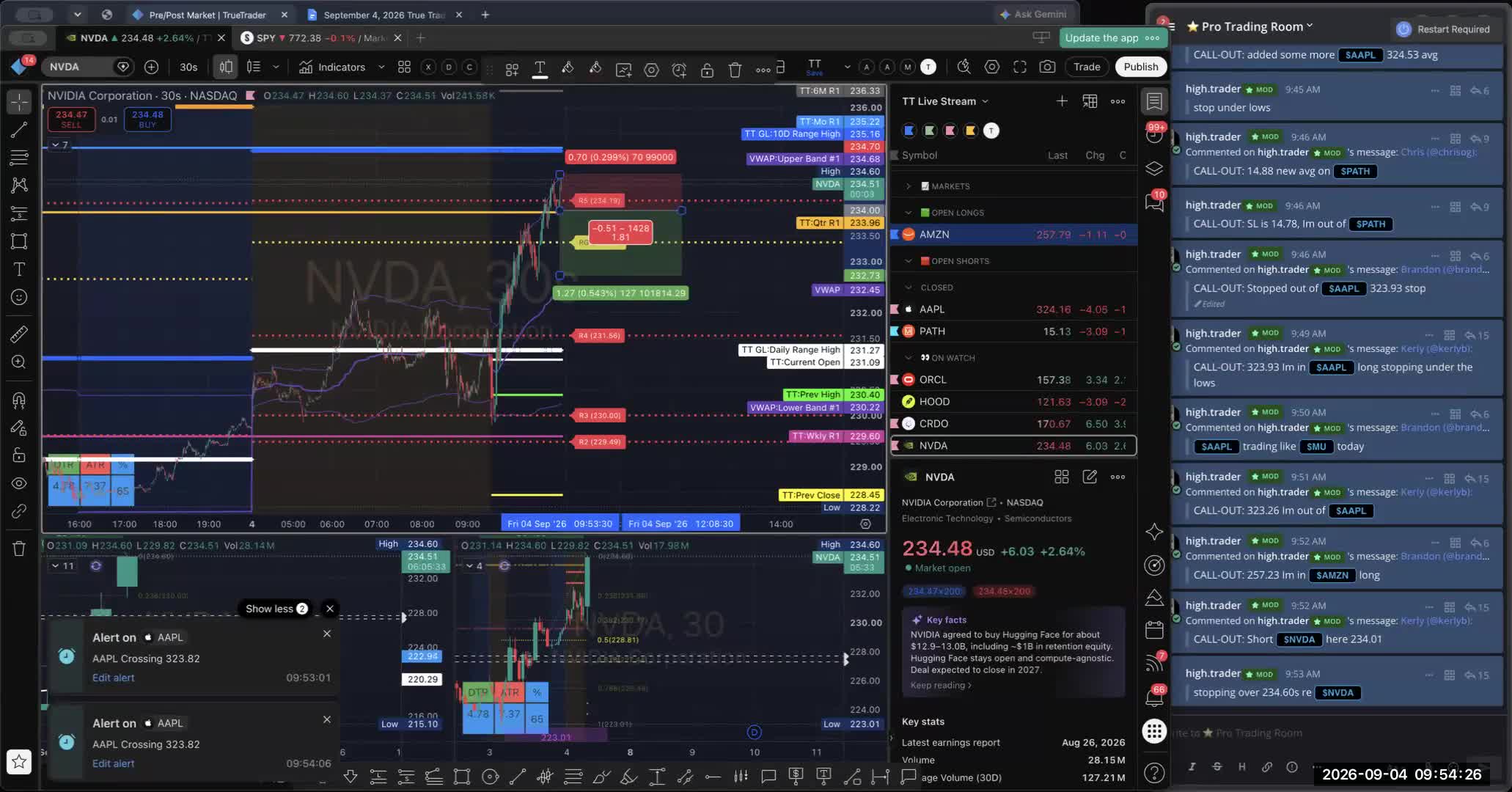
The 1h 12m session is on the other side of this.
Everything above is the write-up. This is the morning itself, with the names on every call and the room talking through it.
Apple set the tone and it was not a good one. The first long was started small, added to, and then stopped on a tick barely under the average — a stop that the trader said out loud was a bad one. It was tried again on the retrace, and again later when the three-minute crossed, and both of those came out for roughly the same loss. Nothing about the plan was wrong on paper; the problem was that the one-minute average had been vertical all morning and there was no pullback structure to lean a stop against, so every entry was paying for a wick.
“So take some time, drop your trades in, analyze them, be human about it, and know, don't just, like, upload your stuff, like, actually review each trade, the decisions you made, and lock in some of the lessons that you learned from them.”
Don't just upload your trades — actually review them, win or lose, and lock in the lessons. His Friday reminder on journaling with intent.
NVDA was worked from both sides — a short into the highs that got kicked over them, then a half-size long with an add planned as it started to smell like a breakout, stopped when it crossed the three-minute hull. Rocket Lab was taken off a bottom band, stopped, re-entered a dollar lower and eventually managed back to flat with the stop trailed up. ASTS was a ten-second-chart trigger entered a few cents late on thin volume, and that late fill was the trade.
The two that paid did the same thing as each other. Both waited for the cross rather than anticipating it, both scaled out in thirds, and on Google the stop went to breakeven once enough was booked — explicitly because the morning had already produced a run of stop-outs and there was no appetite for another. That is the honest read of the session: the process on the winners was tighter than on the attempts, and there were far more attempts.
The morning in figures
Net points are per share. Apply your own size to get your own number: at 1,000 shares, 2.29 points is −$2,290.00. At 100 shares it is −$229.00. At one share it is −$2.29. The desk publishes the move, not a dollar result, because the dollars depend entirely on how you size, and that is your decision rather than ours.
Every trade called that morning
Losers included. Rows with more than one leg were scaled out; open any row to see each exit.